Literature
The literature of traditional Tibetan medicine (Sowa Rigpa) is one of the most comprehensive textual traditions in Asian medical history. Spanning over a millennium, Tibetan healing wisdom as the primary foundation, elements from Indian Ayurvedic treatises, Chinese medical science, and Percian medical systems are incorporated to its indigenous system in the coarse of history.
1. The Core Canon: The Gyushi (The fundamental Four Medical Treatises)
At the heart of all Tibetan medical literature lies the Gyushi (rGyud-bzhi), or the Four Medical Tantras or Treatises.
There are two different sources regarding how this fundamental literature was accomplished. According to one source, these treatises are compiled between the 8th and 12th centuries initiated by the legendary master physician Yuthok Yonten Gonpo the Elder, and later revised by Yuthok Yonten Gonpo the Younger. According to the other source, they were compiled and finalized primarily by the celebrated master Yuthok Yonten Gonpo the Younger in the 12th century. The Gyushi consists of 156 chapters written in poetic, memorable verse. It is structured into four distinct volumes.
- The Root Tantra (Rtsa-rgyud): A concise overview outlining the fundamental principles of health, disease, diagnosis, and treatment using the iconic metaphor of the “Three Medical Trees.”
- The Explanatory Tantra (Bshad-rgyud): An in-depth theoretical text covering human anatomy, embryology, physiology, pathology, dietary guidelines, daily living, and ethical codes for physicians.
- The Instructional Tantra (Man-ngag rgyud): The largest volume, providing practical clinical instructions for diagnosing and treating over 400 specific diseases across various body systems.
- The Subsequent (Subsequent/Final) Tantra (Phyi-ma rgyud): A practical manual detailing diagnostic techniques (such as pulse reading and urinalysis), pharmacology, herbal compounding, and external therapies such as moxibustion, bloodletting, and copper cupping.
2. Major Commentaries and Historical Treatises
To make the highly condensed verse of the Gyushi accessible, for centuries Tibetan scholars authored elaborate commentaries:
- The Blue Beryl (Vaidurya Sngon-po): Authored in the late 17th century by Desi Sangye Gyatso, the regent to the 5th Dalai Lama. It is considered the definitive line-by-line commentary on the Gyushi, standardizing medical education across Tibet.
- The Ancestors’ Advice (Tshig-don ‘grel-pa): An influential early commentary by Yuthok Yonten Gonpo himself that clarified complex metaphors in the original text.
- Regional & Lineage Manuscripts: Distinct Tibetan monastic traditions (such as the Chagpori and Men Tsee Khang lineages) produced specialized regional treatises detailing local pharmacology, high-altitude botanical identification, and lineage-specific formulas.
3. Visual Literature: The Medical Thangkas (scroll paintings)
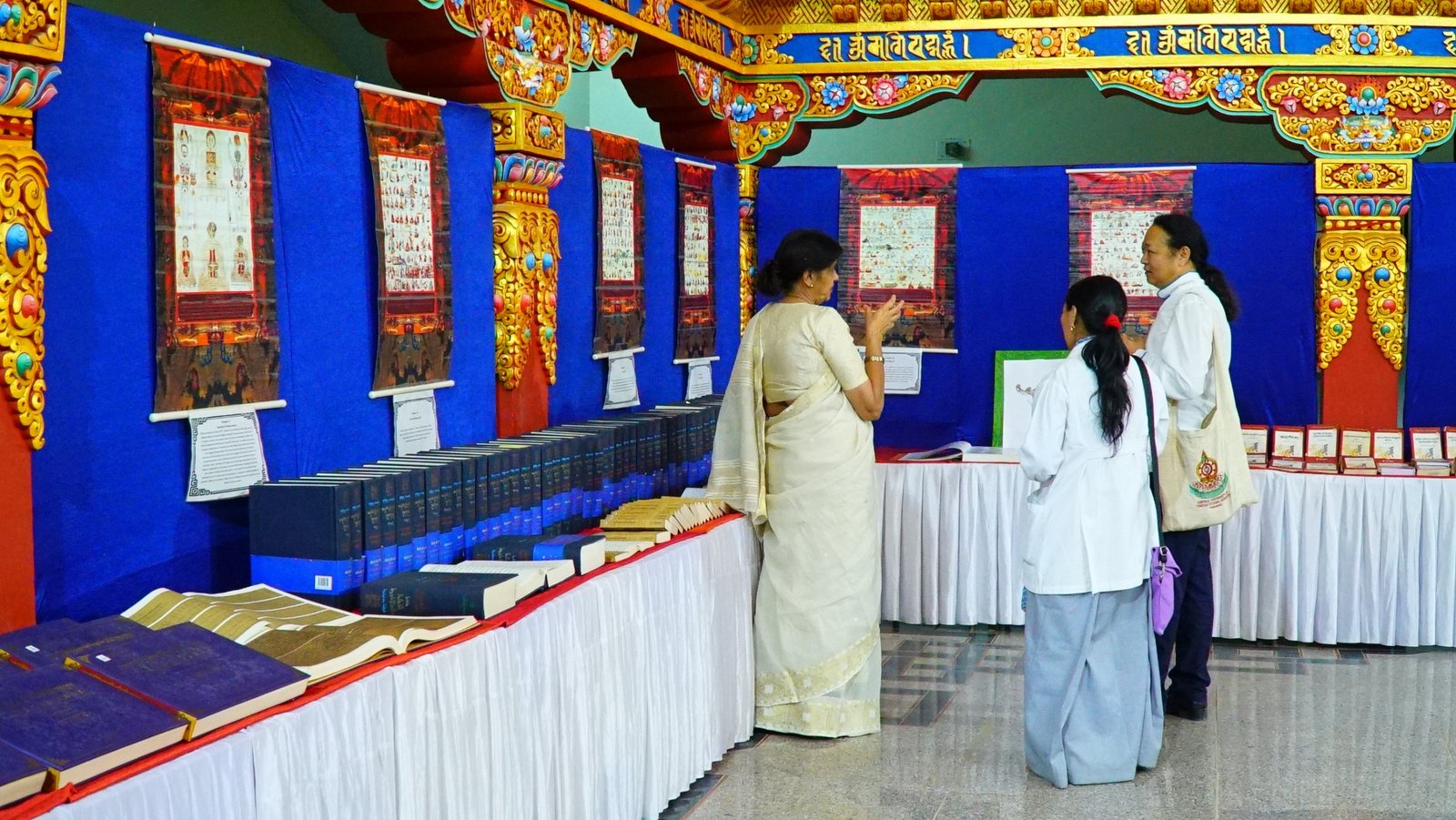
Tibetan medical literature is unique for its integration of visual texts. Under Desi Sangye Gyatso in the 17th century, a series of 79 medical thangkas (scroll paintings) was commissioned to serve as an exact visual depiction of the Blue Beryl and Gyushi.
These paintings acted as comprehensive anatomical atlases, botanical charts, and clinical diagrams, allowing students to visually study complex subjects like embryological development, pulse positions, and herbal gathering methods alongside written texts.
4. Modern Continuations
Today, Tibetan medical literature continues to evolve through institutions like the Men-Tsee-Khang (Tibetan Medical & Astro-science Institute) in Dharamshala and Central Institute of Higher Tibetan Studies, Sarnath outside Tibet with their writings and translations from other traditions. The medical institutes across the Tibetan Plateau constantly produce literature out of their research. Contemporary literature bridges classical textual canons with modern clinical trials, pharmacological standardization, and scientific research.
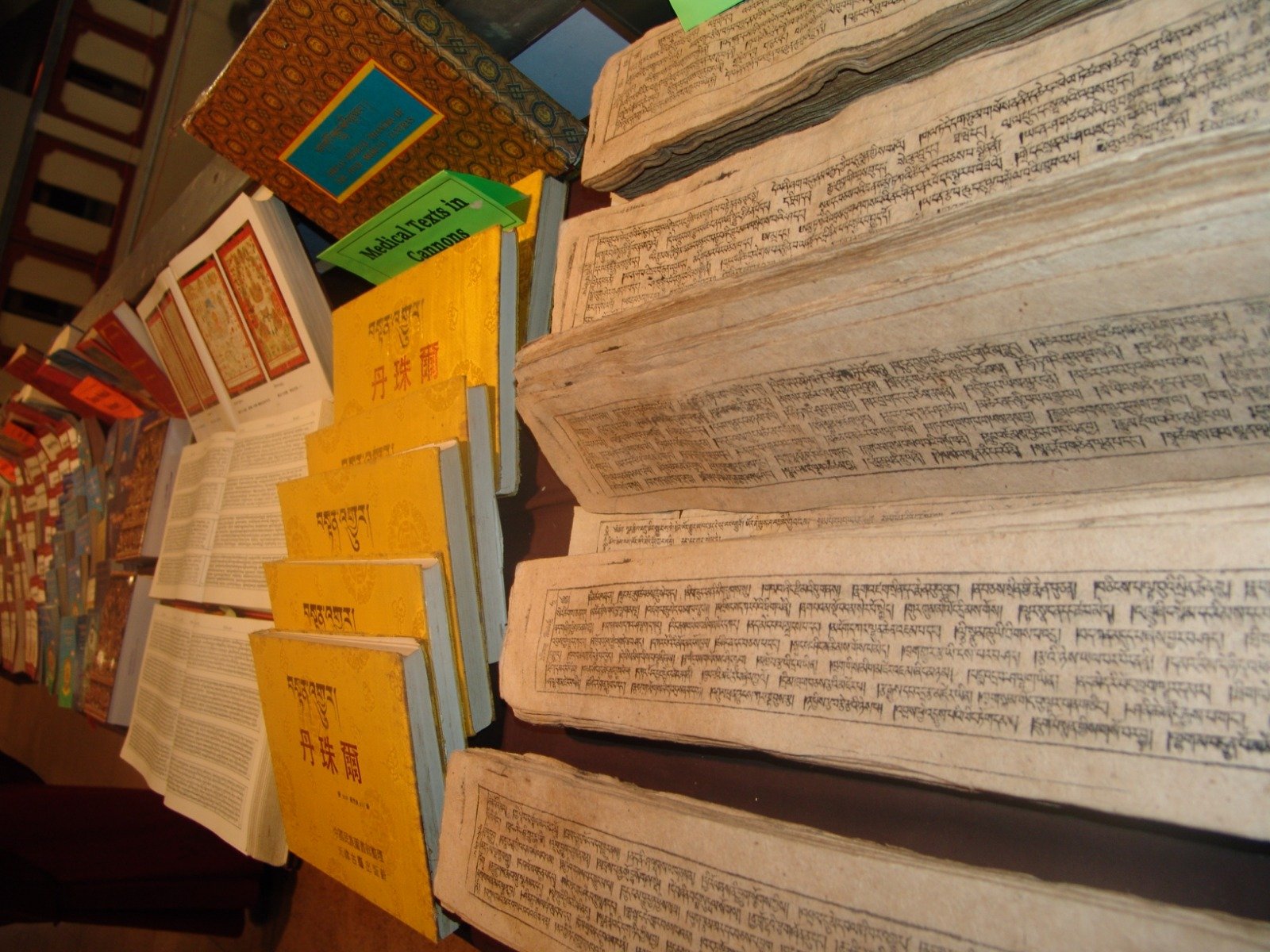
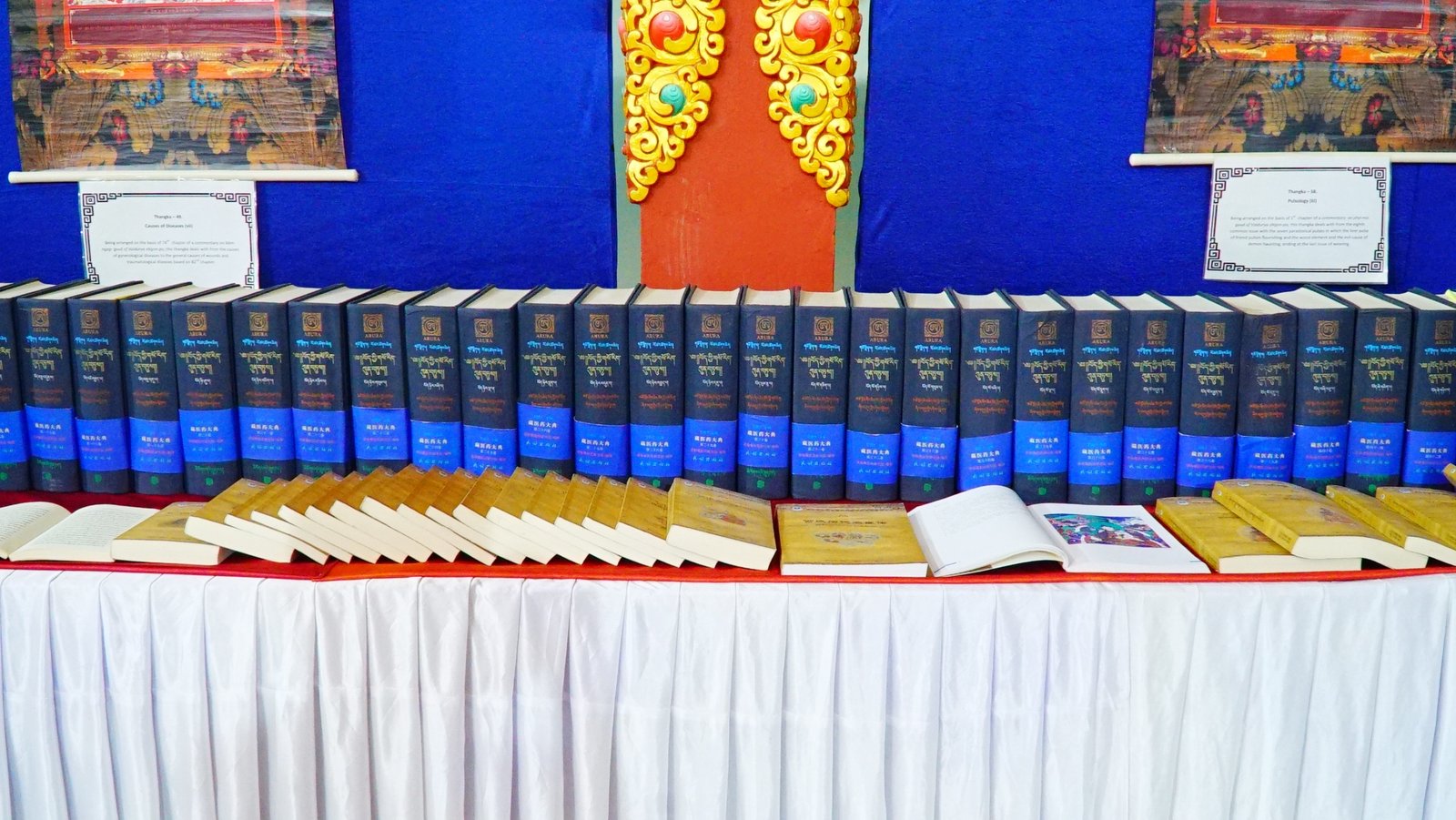
Besides the commentaries on the four fundamental texts, there is a huge corpus of literature on various medical topics either lying in their respective collective works or found in the bodies of manuscripts, which are recently published from different parts of Tibet in various series each running into nearing hundred or over hundred volumes.
The Literature of Tibetan medical system running into several hundreds of volumes